S
AfforestationForestry projectGrand EstLabel Bas-Carbone · Labelled
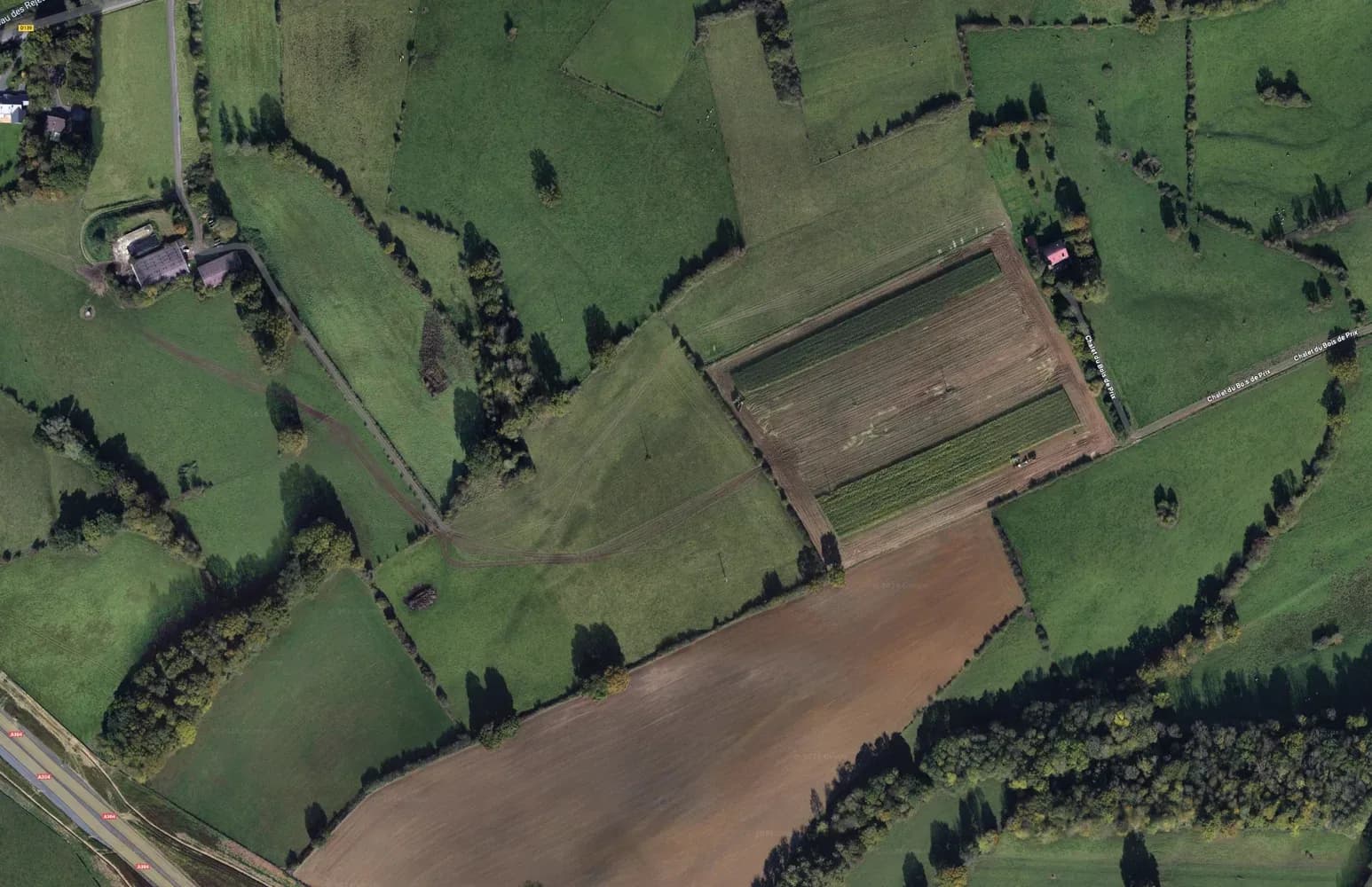
Le bois de Marion / Prix
18.39 ha
Area
6,086 t
CO₂
27,588
Seedlings planned in the project file
Project presentation
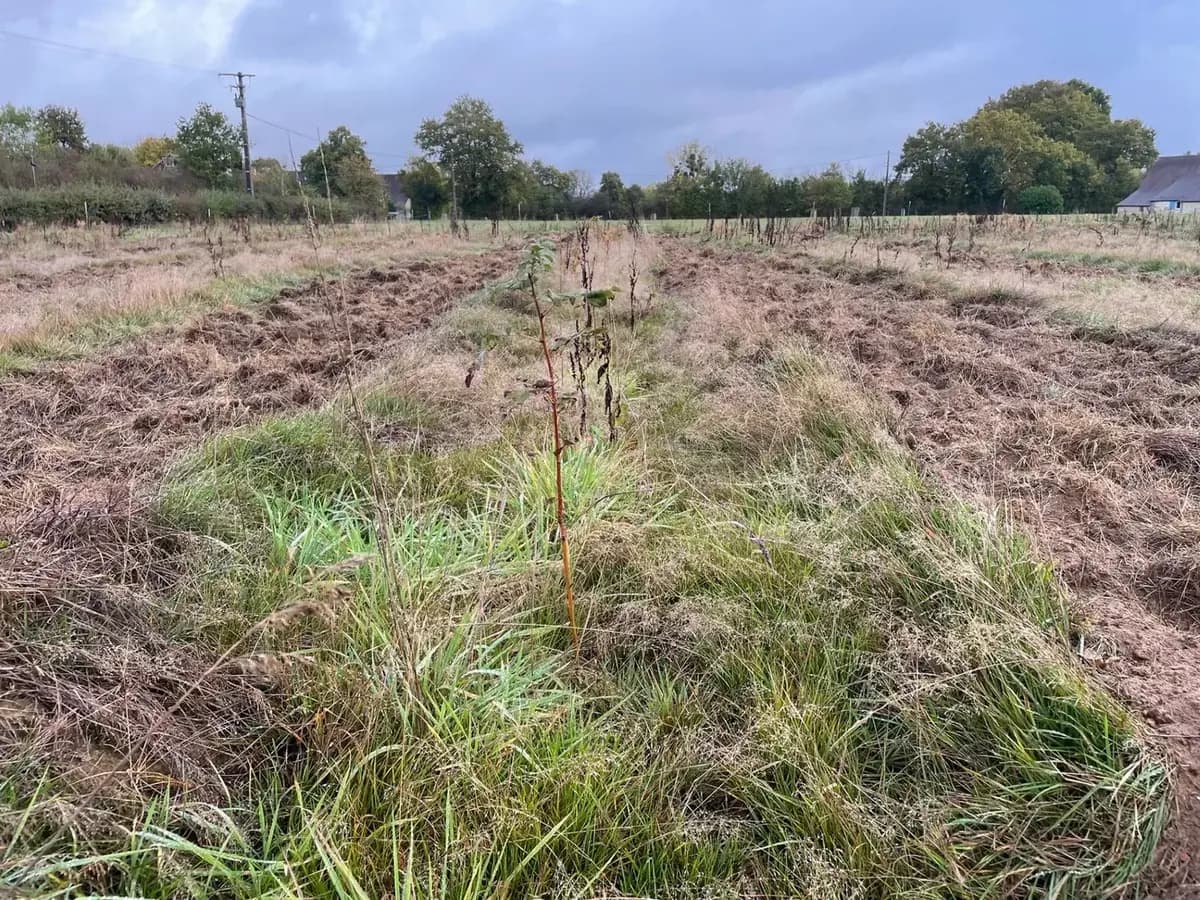
Located in the heart of Grand Est, this afforestation project spans 18.39 hectares in the municipality of Prix-lès-Mézières. Labelled under the Label Bas-Carbone, it is expected to sequester 6,086 tons of CO₂ over its lifetime (expected emission reductions, recognised after verification). The project file plans 27,588 seedlings from 12 different species, to promote biodiversity and ecosystem resilience.
Socio-economic benefits
1.3FTE-years of forestry work mobilised over 30 years
This project mobilises about 1.3 years of full-time forestry work (between 1.1 and 2.2), spread over the project’s 30 years.
- Forestry work on the plot (planting, weeding, cleaning, pruning)
- 1.2 FTE-years (between 1.0 and 2.0)
- Verification audit (Stock CO₂ data)
- 66 hours
- Timber harvesting during the project (first thinnings, up to 30 years)
- 71 hours (between 13 and 170)
- Growing the plants in forest nurseries
- not quantified (no published source)
- Timber harvesting at term (later thinnings and final felling, beyond the 30 years, around age 107), not included above
- 1.0 FTE-years (between 0.6 and 1.6)
- Total including timber harvesting at term
- 2.3 FTE-years (between 1.7 and 3.8)
Method: planted area × working hours per hectare published by the ONF (technical itineraries 2011-2015), over the project’s 30 years; audit: 5 to 10 days depending on area (Stock CO₂ data); harvesting: harvested volumes (ONF, Fournier et al. 2022) × harvester and forwarder productivity (FCBA 2005); ÷ 1,607 h, the French statutory annual working time; nurseries not quantified; Stock CO2 estimate.
Planted species (12)
Species diversity strengthens forest resilience against diseases and climate change.
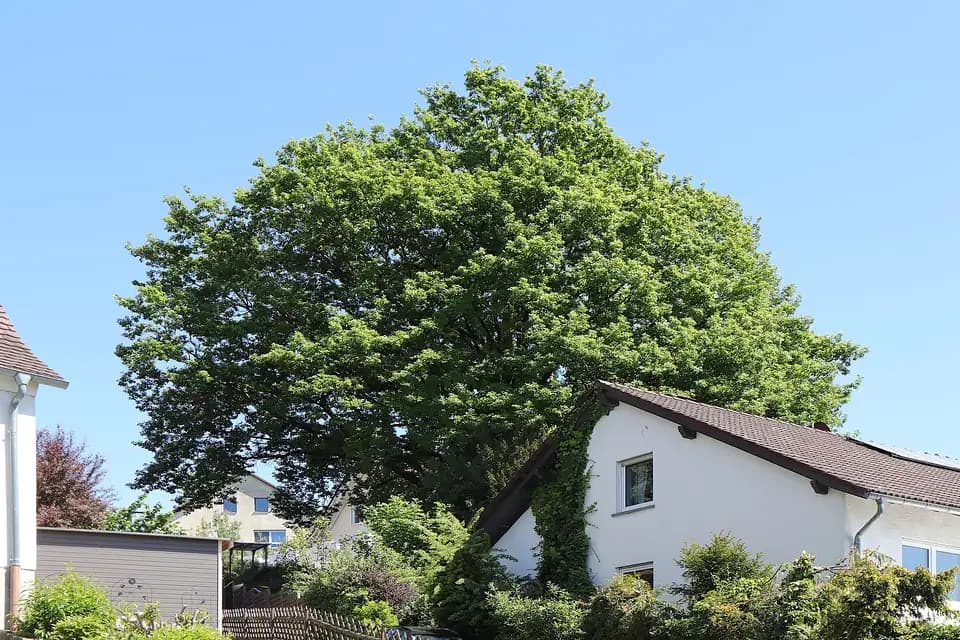
Chêne rouvre / sessile
Quercus petraea · Fagaceae
Arbre majestueux pouvant vivre plus de 500 ans et atteindre 40 m. Essence emblématique des forêts françaises, son bois est prisé en tonnellerie et ébénisterie.
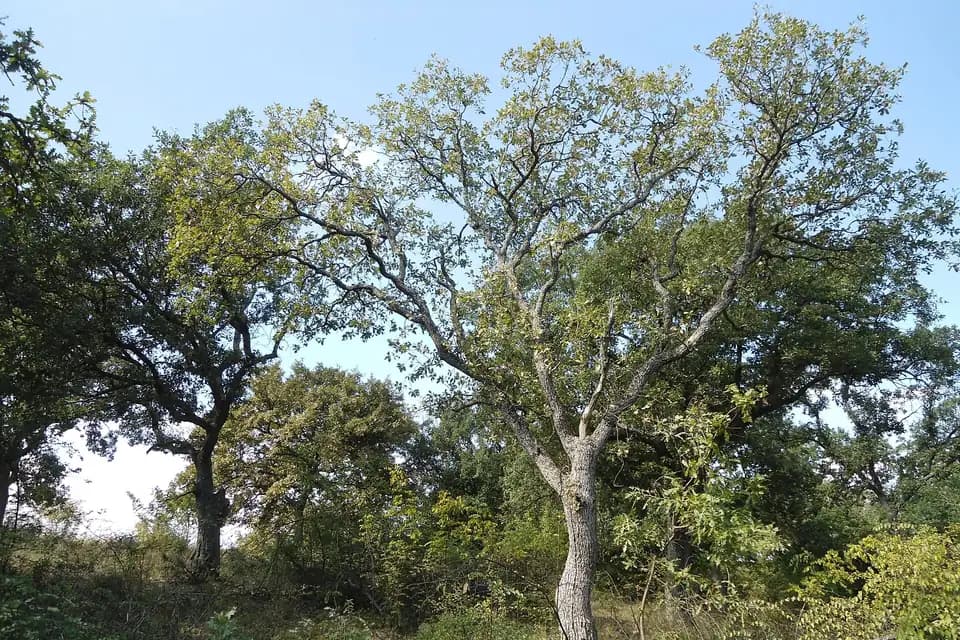
Chêne pubescent
Quercus pubescens · Fagaceae
Chêne méditerranéen de taille moyenne (20 m), résistant à la sécheresse. Feuilles marcescentes persistant sur l'arbre en hiver. Essence clé de la garrigue.
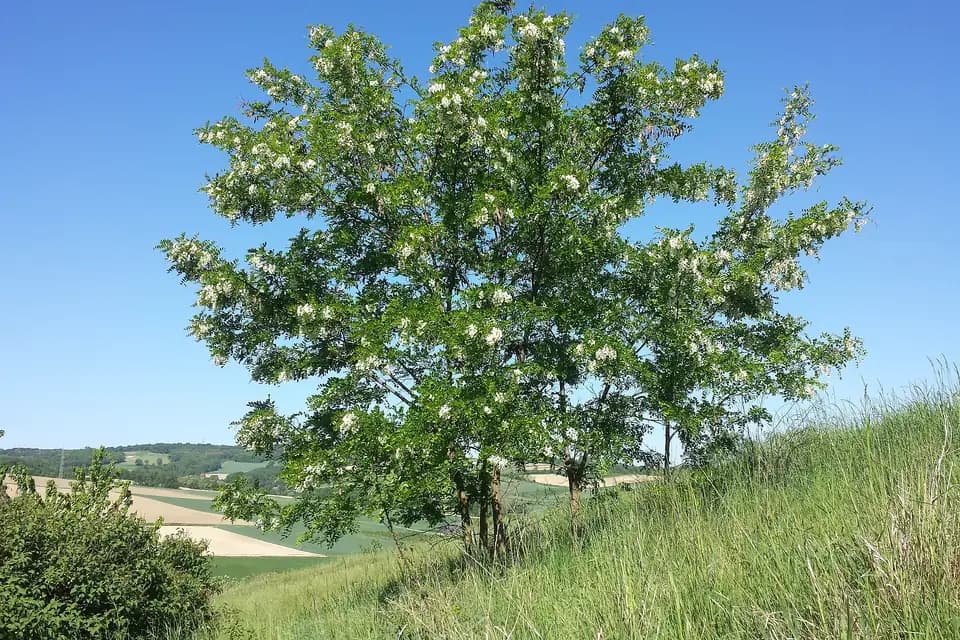
Robinier faux-acacia
Robinia pseudacacia · Fabaceae
Originaire d'Amérique du Nord, introduit en France en 1601. Ses racines fixent l'azote. Bois extrêmement durable, naturellement classe 4, idéal pour les usages extérieurs.
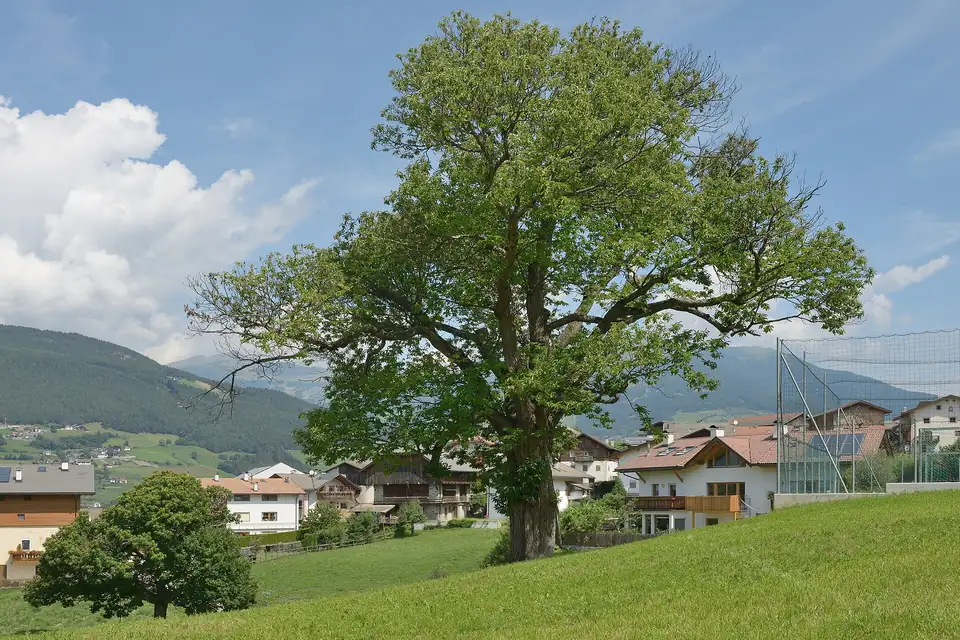
Châtaignier commun
Castanea sativa · Fagaceae
Surnommé l'arbre à pain, il a nourri des populations entières pendant des siècles. Peut vivre plus de 1000 ans. Bois résistant naturellement utilisé en piquets et charpente.
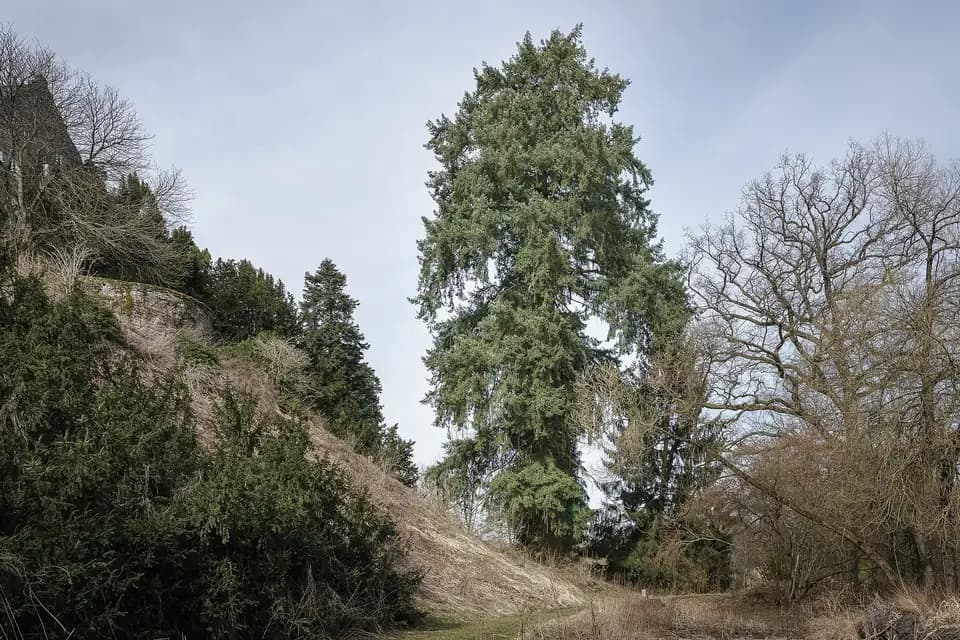
Douglas vert
Pseudotsuga menziesii · Pinaceae
Originaire de la côte ouest de l'Amérique du Nord, le Douglas atteint 60 m en France et jusqu'à 100 m dans son aire d'origine. Son bois est utilisé en charpente, construction et bois énergie. Essence en expansion en France grâce à sa croissance rapide et son excellence adaptation climatique.
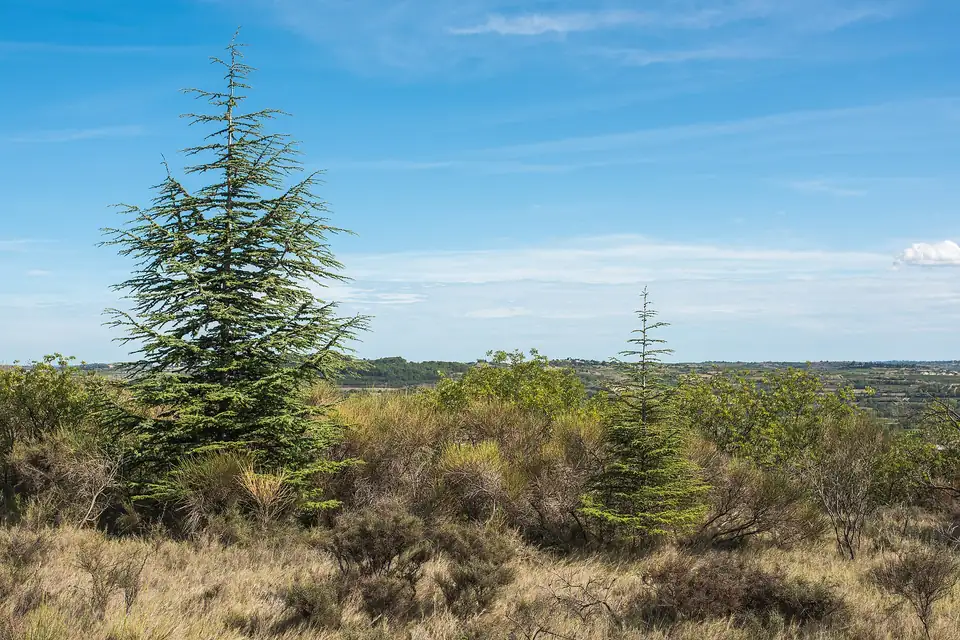
Cèdre de l'Atlas
Cedrus atlantica · Pinaceae
Originaire des montagnes d'Afrique du Nord, il atteint 40 m. Bois durable naturellement résistant aux insectes, utilisé en ébénisterie. Essence d'avenir face au changement climatique.
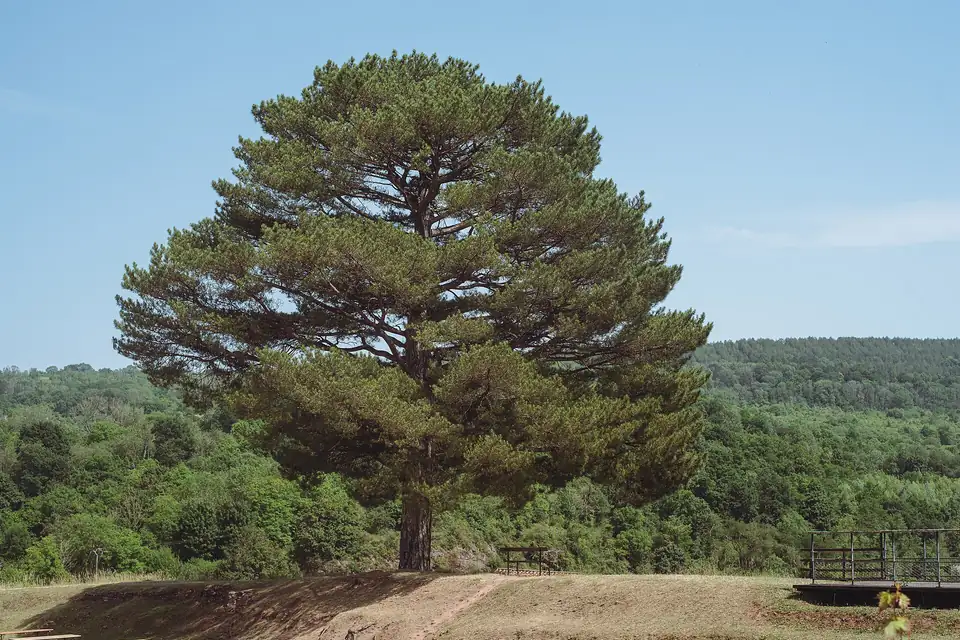
Pin noir (2 variétés : Autriche, laricio de Corse)
Pinus nigra · Pinaceae
Endémique des montagnes corses et calabraises, il atteint 40 m et vit jusqu'à 600 ans. Son fût droit est très recherché pour la charpente et la menuiserie.
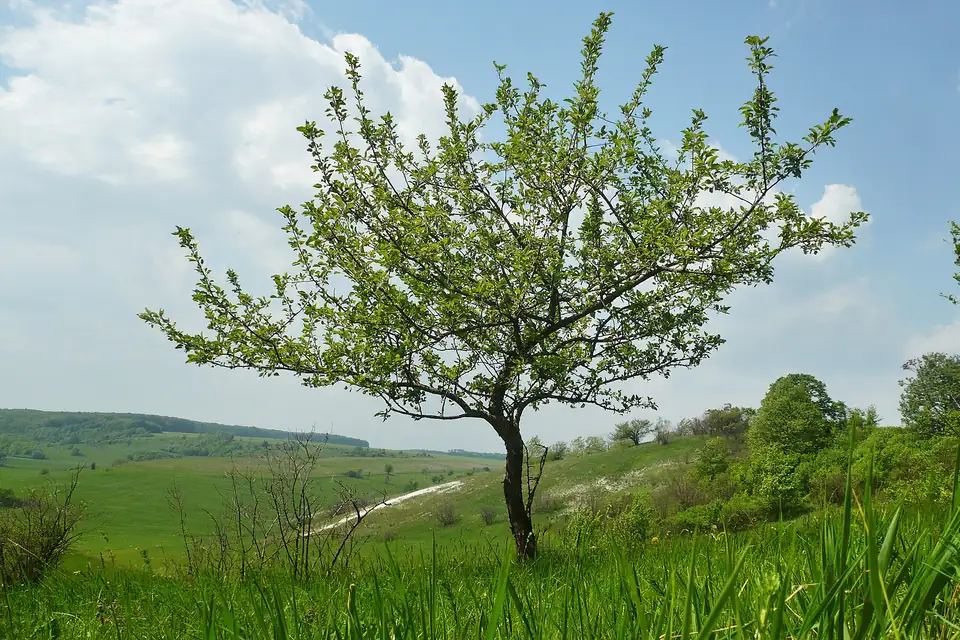
Pommier sauvage
Malus sylvestris · Rosaceae
Petit arbre épineux (10 m max), ancêtre de nos pommiers cultivés. Fruits petits et acides. Rôle crucial pour la faune sauvage et les pollinisateurs.
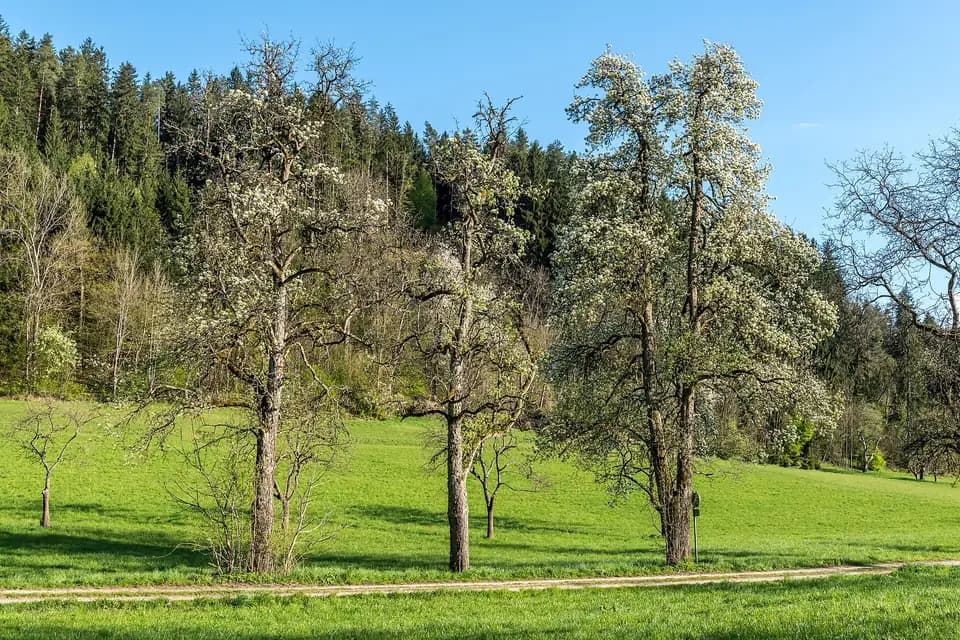
Poirier sauvage
Pyrus communis
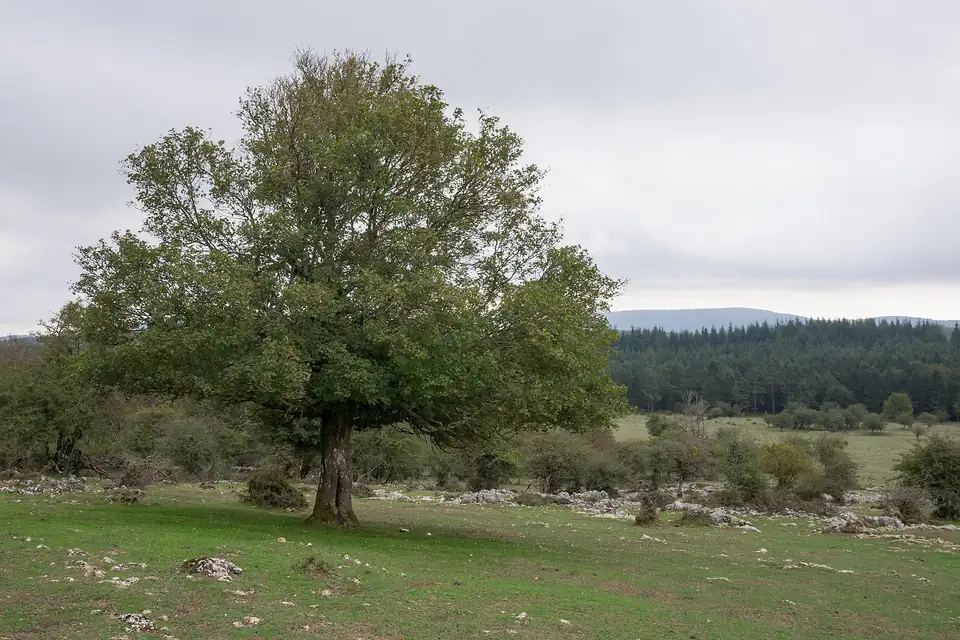
Érable champêtre
Acer campestre · Sapindaceae
Petit arbre (15 m max) très commun en lisière et dans les haies. Excellent pour les haies champêtres, il résiste bien à la taille. Bois dur utilisé en tournage.
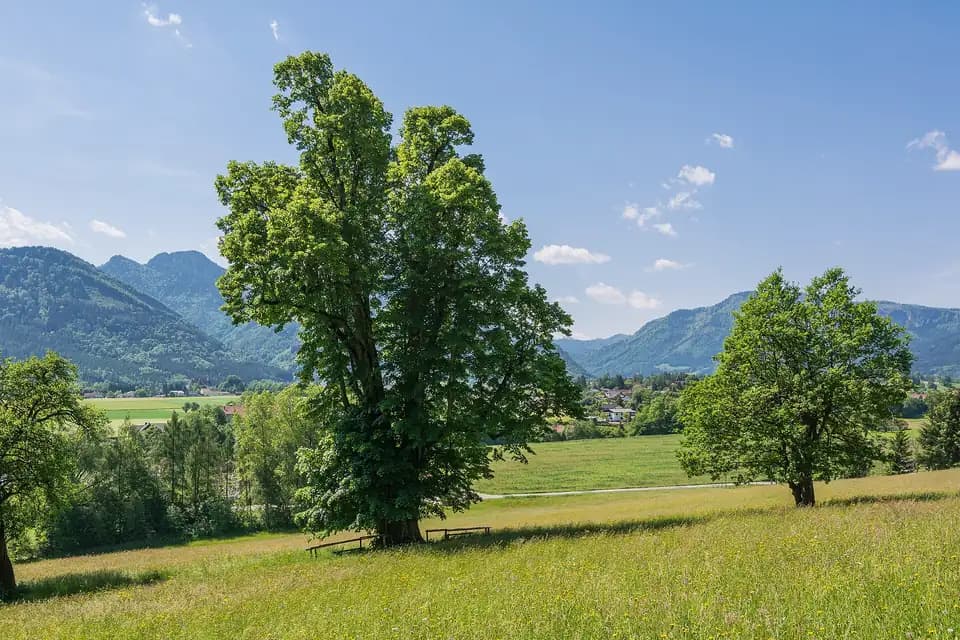
Tilleul à grandes feuilles
Tilia platyphyllos · Malvaceae
Arbre majestueux pouvant dépasser 40 m et vivre plus de 500 ans. Ses fleurs sont utilisées en tisane apaisante depuis l'Antiquité.
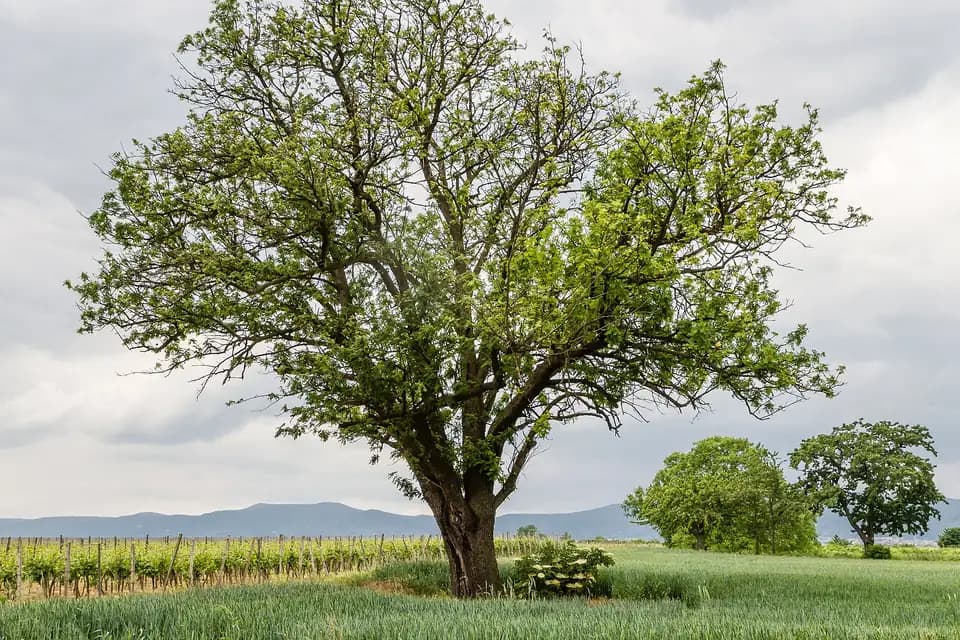
Cormier / Sorbier domestique
Sorbus domestica · Rosaceae
Arbre devenu rare, atteignant 20 m. Son bois est l'un des plus durs et des plus lourds d'Europe. Ses fruits (cormes) étaient autrefois consommés blets.
Environmental & social impacts
Beyond its climate effect, each project acts on the environment and the local area. Here is the assessment of this project, dimension by dimension.
Climate
98%
This project is expected to sequester 330.9 tCO₂/ha over its lifetime (expected reductions, recognised after verification). Carbon is captured in biomass (trunks, branches, roots) and soils. This is the project's primary impact: contributing to climate change mitigation by removing CO₂ from the atmosphere.
Biodiversity
Very high impact96%
With 12 different species (strong diversity), this project creates a rich habitat for wildlife. The ecological corridors formed allow species to circulate, promoting pollination and natural biological pest control.
Water
Very high impact98%
Over 18.39 ha, the forest cover acts as a natural filter. Roots promote water infiltration into soils, reduce runoff and erosion, and enable groundwater recharge.
Soils
Very high impact98%
With 1500 seedlings planned per hectare, the root system structures the soil in depth. Litter (dead leaves, twigs) enriches organic matter, feeds soil microorganisms and increases water retention capacity.
Socio-economic
High impact84%
This project of 18.39 ha in Prix-lès-Mézières relies on field work for its implementation, maintenance and monitoring, and helps enhance the territory and its natural heritage.
Sustainable Development Goals
The 17 SDGs are a global framework defined by the United Nations to build a sustainable future by 2030. This project directly contributes to 6 of them. Here's why.
3
Good Health and Well-being
Ensure healthy lives and promote well-being for all
Why this project: This project contributes to this goal through its carbon sequestration actions and strengthening of local ecosystems.
6
Clean Water and Sanitation
Ensure availability and sustainable management of water
Why this project: The forest cover on 18.39 ha naturally filters runoff water and promotes groundwater recharge. By reducing erosion and nutrient leaching, this project improves water quality available for local uses.
8
Decent Work and Economic Growth
Promote sustained, inclusive and sustainable economic growth
Why this project: This project contributes to this goal through its carbon sequestration actions and strengthening of local ecosystems.
12
Responsible Consumption and Production
Ensure sustainable consumption and production patterns
Why this project: The 27,588 trees planned on 18.39 ha, of 12 different species, will in the long term form a renewable wood resource, from a forest monitored for the whole project duration.
13
Climate Action
Take urgent action to combat climate change and its impacts
Why this project: This is the primary impact: this project aims to sequester 6,086 tons of CO₂ over its lifetime under the Label Bas-Carbone framework (expected reductions, recognised after verification). Every ton removed from the atmosphere contributes to fighting climate change.
15
Life on Land
Protect, restore and promote sustainable use of terrestrial ecosystems
Why this project: This project of 18.39 ha in Prix-lès-Mézières plants 12 different species, recreating a forest ecosystem: wildlife habitat, ecological corridors and richer soil biodiversity.
Project timeline
Project notification
April 12, 2024The project owner notifies the ministry of the project.
File submission
April 25, 2024The complete file is submitted to the competent authority for review.
Labelling
June 11, 2024The project is validated and receives the Label Bas-Carbone.
Planting
January 2025Selected tree species are planted on the plot.
Year 1 monitoring
January 2026Monitoring of the project actions — year 1/5.
Year 2 monitoring
January 2027Monitoring of the project actions — year 2/5.
Year 3 monitoring
January 2028Monitoring of the project actions — year 3/5.
Year 4 monitoring
January 2029Monitoring of the project actions — year 4/5.
Year 5 monitoring
January 2030Monitoring of the project actions — year 5/5.
Verification audit
December 2053An independent auditor verifies that the project carbon objectives have been met.
Recognition of reductions
June 2054After verification by an independent auditor, the ministry recognises the emission reductions, which are then definitively acquired.
Project journal
The main milestones of the project. Detailed monitoring is shared with the companies that fund it, in their private space.
- automated note
Labellisation
Le projet a obtenu le Label Bas-Carbone.
- automated note
Dépôt du dossier
Le dossier complet a été déposé pour instruction : description des parcelles et des essences, calcul des réductions attendues, engagement de suivi sur toute…
- automated note
Notification du projet
Le projet a été notifié au ministère de la Transition écologique, première étape du parcours de labellisation.
Location
Town
Prix-lès-Mézières
Postal code
8000
Department
Ardennes (08)
Region
Grand Est
Label Bas-Carbone method · Afforestation
Planting a forest on land that has not been wooded for at least 10 years. The project stores carbon in biomass (trunks, branches, roots), soils and durable wood products.
The Label Bas-Carbone is the official framework of the French Ministry of Ecological Transition for emission reduction projects carried out in France. A project is labelled on the basis of its application, following a method approved by the ministry. Its emission reductions are then verified by an independent auditor before being recognised by the ministry.
How it works:
1. The project owner submits a file describing the reference scenario (without project) and the project scenario.
2. The difference between the two scenarios gives the net emission reductions, expressed in tons of CO₂ equivalent.
3. An independent auditor verifies the data in the field and validates the calculations.
4. The ministry issues the Low-Carbon Label and carbon credits are issued.
5. The project is monitored for 30 years with periodic verifications.
Support this project
Project status
Label Bas-Carbone methodBOISEMENT
StatusLabelled
ODD
368121315
Impact score
About the Label Bas-Carbone
The only carbon contribution label officially recognised by the French state. Every project is audited by an independent body and listed in the public registry.
Stock CO2
Similar projects

Interested in this project?
Talk to a Stock CO2 expert
We help you select the project that best fits your CSR strategy.
Read also
Guides
Definitions