S
BuildingProjetÎle de FranceLabel Bas-Carbone · Labelled
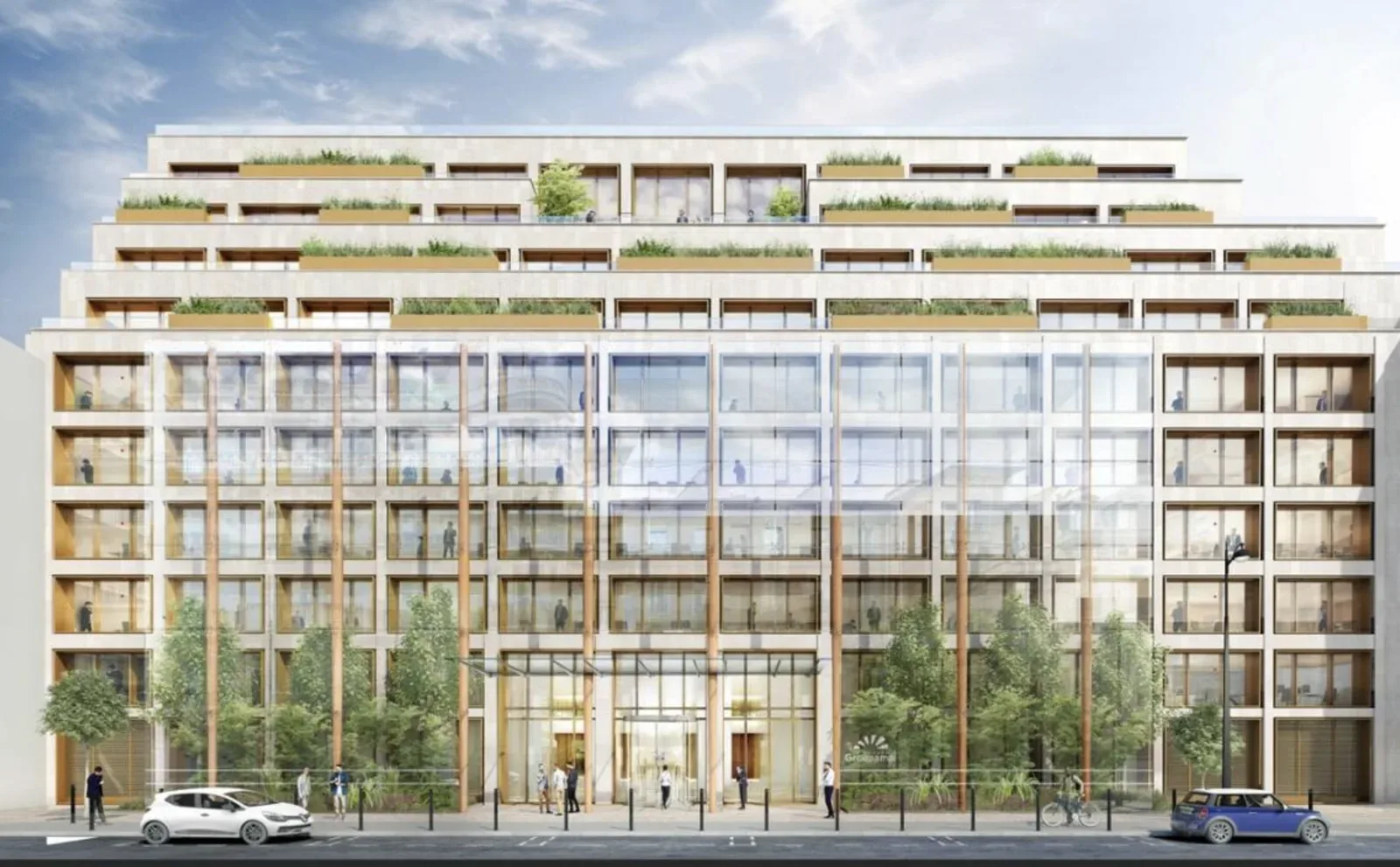
L'immeuble Astorg (siège de Groupama)
1.71 ha
Area
550 t
CO₂
550 t
Available CO₂
Project presentation
In Paris, a bâtiment project spans 1.71 hectares. Labelled under France's Label Bas-Carbone, it contributes to the sequestration of 550 tonnes of CO₂ while enhancing local biodiversity, soil health, and ecosystem resilience. A concrete investment for climate and communities.
Environmental & social impacts
Beyond carbon sequestration, each project generates measurable positive impacts on the environment and local communities. Here is the detailed assessment of this project.
🌍Climate
82%
This project is expected to sequester 321.5 tCO₂/ha over its lifetime (expected reductions, recognised after verification). Carbon is captured in biomass (trunks, branches, roots) and soils. This is the project's primary impact: contributing to climate change mitigation by removing CO₂ from the atmosphere.
Biodiversity
Low impact35%
This project creates a rich habitat for wildlife. The ecological corridors formed allow species to circulate, promoting pollination and natural biological pest control.
Water
Low impact30%
Over 1.71 ha, the vegetation cover acts as a natural filter. Roots promote water infiltration into soils, reduce runoff and erosion, and enable groundwater recharge. Downstream water quality is directly improved.
Soils
Low impact25%
The root system structures the soil in depth. Litter (dead leaves, twigs) enriches organic matter, feeds soil microorganisms and increases water retention capacity. A living, fertile soil is the foundation of a resilient ecosystem.
Socio-economic
High impact85%
This project of 1.71 ha in Paris relies on field work for its implementation, maintenance and monitoring, and helps enhance the territory and its natural heritage. It strengthens the link between rural communities and their environment, contributing to the ecological transition.
Sustainable Development Goals
The 17 SDGs are a global framework defined by the United Nations to build a sustainable future by 2030. This project directly contributes to 4 of them. Here's why.
7
Affordable and Clean Energy
Ensure access to affordable, reliable and sustainable energy
Why this project: This project contributes to this goal through its carbon sequestration actions and strengthening of local ecosystems.
11
Sustainable Cities and Communities
Make cities and settlements inclusive, safe and sustainable
Why this project: By integrating bio-based materials into construction, this project reduces the carbon footprint of urban buildings and contributes to making cities more sustainable.
12
Responsible Consumption and Production
Ensure sustainable consumption and production patterns
Why this project: This project contributes to responsible consumption and production by substituting low-carbon solutions for conventional practices.
13
Climate Action
Take urgent action to combat climate change and its impacts
Why this project: This is the primary impact: this project aims to sequester 550 tons of CO₂ over its lifetime under the Label Bas-Carbone framework (expected reductions, recognised after verification). Every ton removed from the atmosphere contributes to fighting climate change.
Project timeline
Project notification
January 10, 2022The project owner submits their application to the ministry.
File submission
August 4, 2022The complete file is submitted to the competent authority for review.
Labelling
September 14, 2022The project is validated and receives the official Low-Carbon Label.
Year 1 monitoring
September 2023Project performance indicators check — year 1/5.
Year 2 monitoring
September 2024Project performance indicators check — year 2/5.
Year 3 monitoring
September 2025Project performance indicators check — year 3/5.
Year 4 monitoring
September 2026Project performance indicators check — year 4/5.
Year 5 monitoring
September 2027Project performance indicators check — year 5/5.
Verification audit
March 2052An independent auditor verifies on site that the project carbon objectives have been met.
Recognition of reductions
September 2052After verification by an independent auditor, the ministry recognises the emission reductions, which are then definitively acquired.
Project journal
The main milestones of the project. Detailed monitoring is shared with the companies that fund it, in their private space.
- automated note
Labellisation
Le projet a obtenu le Label Bas-Carbone.
- automated note
Dépôt du dossier
Le dossier complet a été déposé pour instruction : description des parcelles et des leviers mobilisés, calcul des réductions attendues, engagement de suivi…
- automated note
Notification du projet
Le projet a été notifié au ministère de la Transition écologique, première étape du parcours de labellisation.
📍 Location
Town
Paris
Postal code
75008
Department
Paris (75)
Region
Île de France
Label Bas-Carbone method · Bio-based buildings
Construction using bio-sourced materials (wood, straw, hemp) that store carbon durably in the building structure.
The Label Bas-Carbone is the official framework of the French Ministry of Ecological Transition for emission reduction projects carried out in France. A project is labelled on the basis of its application, following a method approved by the ministry. Its emission reductions are then verified by an independent auditor before being recognised by the ministry.
How it works:
1. The project owner submits a file describing the reference scenario (without project) and the project scenario.
2. The difference between the two scenarios gives the net emission reductions, expressed in tons of CO₂ equivalent.
3. An independent auditor verifies the data in the field and validates the calculations.
4. The ministry issues the Low-Carbon Label and carbon credits are issued.
5. The project is monitored for 50 years with periodic verifications.
Support this project
Project status
Label Bas-Carbone methodBÂTIMENT
StatusLabelled
ODD
7111213
Impact score
About the Label Bas-Carbone
The only carbon contribution label officially recognised by the French state. Every project is audited by an independent body and listed in the public registry.
Stock CO2
Interested in this project?
Talk to a Stock CO2 expert
We help you select the project that best fits your CSR strategy.
Read also
Guides
Definitions